





Plastic Pelletizing Machine for Soft materials TPE, EVA, EPE & Film Scraps
Plastic Recycling Equipment · ALLWIN Machinery
Soft Plastic Pelletizing Machine for TPE, EVA, EPE & Film Scraps
The water-free way to turn soft, sticky, heat-sensitive waste into uniform, sellable pellets. No wrapping screw, no sticky noodles, no second drying step.
0 Water
No water bath, no dryer needed
Forced Feed
Fluffy / film / foam feed straight in
Low-temp
Less degradation, better color
Uniform
Round, clean pellets ready to sell
Working Principle
Conventional pelletizing lines use heat in one direction — they melt rigid plastic, pull it through a water bath, then cut and dry it. Soft materials break that logic: they slip in the feeder, stick in the water, and degrade at high heat. This line reverses the cooling logic instead of fighting it.
-
Forced feeding solves "the screw won't bite."
Soft, fluffy, or film material cannot be gravity-fed — it wraps around and slips. A hydraulic ram pushes the material directly into the screw channel, so throughput stays stable even with low-density feed. -
Gentle, low-temperature plasticizing.
The single screw melts the material through independently controlled barrel zones. For elastomers and low-melt resins we run at the lowest workable temperature, keeping shear and heat history low so the material does not yellow or lose mechanical properties. -
Continuous filtration.
A hydraulic screen changer removes contamination without stopping the line, keeping the melt clean and the pellet color consistent. -
Die-face hot cut.
The melt exits the die holes while still soft; a high-speed rotating blade cuts it into pellets right at the die face — no strands to pull. -
Air-cooled conveying — the key difference.
Instead of dropping hot pellets into a water bath, a blower carries them through a duct while cooling air flows around them. By the time they reach the collection hopper they are already solid and separated — so soft pellets never touch, never stick, and no dryer is needed.
Watch the line in action
How It Differs from a Conventional Plastic Pelletizer?
Not better or worse overall — built for a different material:
| Dimension | Conventional water-strand / water-ring line | Air-cooled soft-material line |
|---|---|---|
| Best material | Rigid / hard plastics | Soft, elastic, low-melt, heat-sensitive |
| Feeding fluffy / film waste | Wraps the screw, poor intake | Hydraulic forced feeder, stable intake |
| Cooling method | Water bath → dewater → dryer | Air conveying, no water, no dryer |
| Soft pellets sticking | Common — noodles clump together | Cooled in flight, stay separate |
| Heat-sensitive material | High melt temp, degrades | Multi-zone low-temp control, preserves properties |
| Process steps | More (water + dewatering + drying) | One continuous closed loop, one operator |
Application Scenarios:
Recycling of flexible waste
Turn TPE / TPR scraps, EPE foam offcuts, PE/PP film and woven-bag waste back into sellable granules.
In-plant scrap recovery
Reject parts and edge trim from injection / molding lines re-pelletized and fed straight back to production.
Compounding & masterbatch
Pelletizing soft compounds, hot-melt adhesives and low-melt resins without heat damage.
Recycling granulators
Add a dedicated soft-material line alongside your hard-plastic line to widen what you can reprocess.
What Materials It Handles?
Click a material to see what the line processes — each material gets its own recycling image.
TPE / TPR / TPU EPDM & Silicone EVA / EPE Foam Soft PVC PE / PP Film & Woven Bags Hot-melt Adhesive / Low-melt Wax Fiber / Non-woven Waste


Not intended for high-melting engineering plastics (PC, PA, POM) — those are better suited to conventional water-strand lines.
Key Specifications
| Screw diameter | [e.g. 120 mm] — to be confirmed per model |
| Throughput | [to be confirmed by material & model] |
| Heating zones | Multi-zone, independently controlled |
| Cutting method | Die-face hot cut, air-cooled |
| Cooling | Air conveying (no water / no dryer) |
| Voltage | Customized to your country |
Exact capacity, power and screw size are tailored to your material and output target. Tell us what you process — we will offer the best solutions as per your material and demands.
Why Buy from ALLWIN
Built for soft waste
Not a hard-plastic line repurposed — designed from the feeder up for flexible materials.
Free sample trial
Send us your material, we run it and send back real pellets and a video.
Support & training
Installation guidance, operator training, lifetime after-sales.
FAQ:
1.Q: Does it really need no water?
1.A: No. Pellets are cut at the die face and cooled by air as they are conveyed — no water bath and no dryer.
2.Q: Will the pellets stick together?
2.A: Because cooling and conveying happen at the same time, soft pellets stay separated — the main reason buyers switch from water lines.
3.Q: What is the difference from a normal pelletizer?
3.A: A normal line is for rigid plastic: melt → water cool → cut → dry. This one is for soft waste: forced feed → low-temp melt → die-face cut → air cool, with no water step.
4.Q: Can I try it with my own material first?
4.A: Yes — ship us a sample, we run a trial and report back before you commit.
Turn your soft waste into sellable pellets.
Tell us your material and target output. We will recommend the right line — and run a free trial on your sample.
ALLWIN Machinery · Zhangjiagang, China · mandy@allwinkeji.com · WhatsApp: +86 139 5244 3782
INQUIRY
-
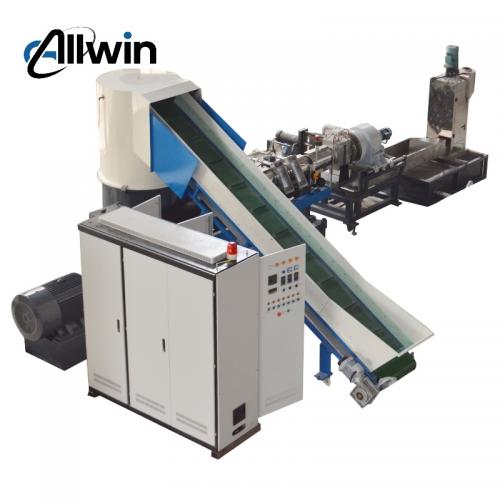
200kg/h PP PE waste film granulator machine
-
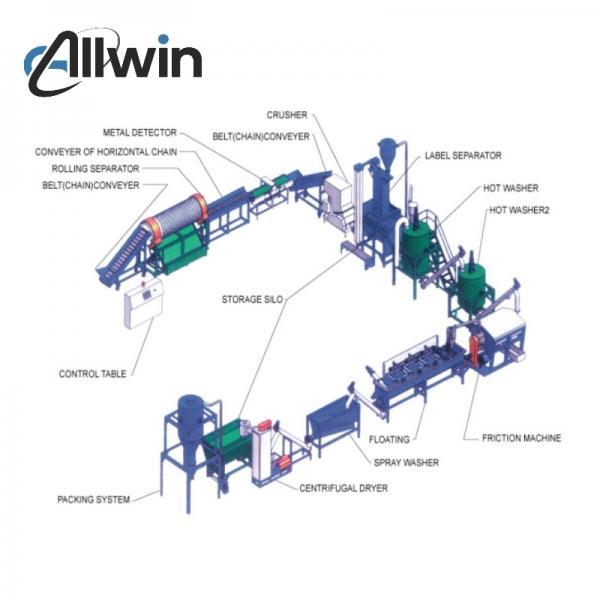
500kg/h PET Bottle Recycling Machine
-
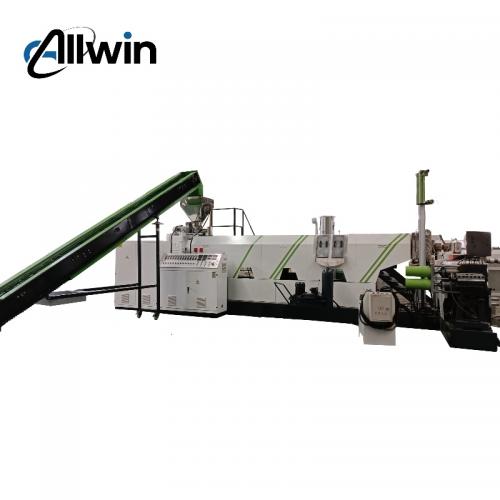
PP Woven Bag Plastic Recycling Granulator Supplier
-
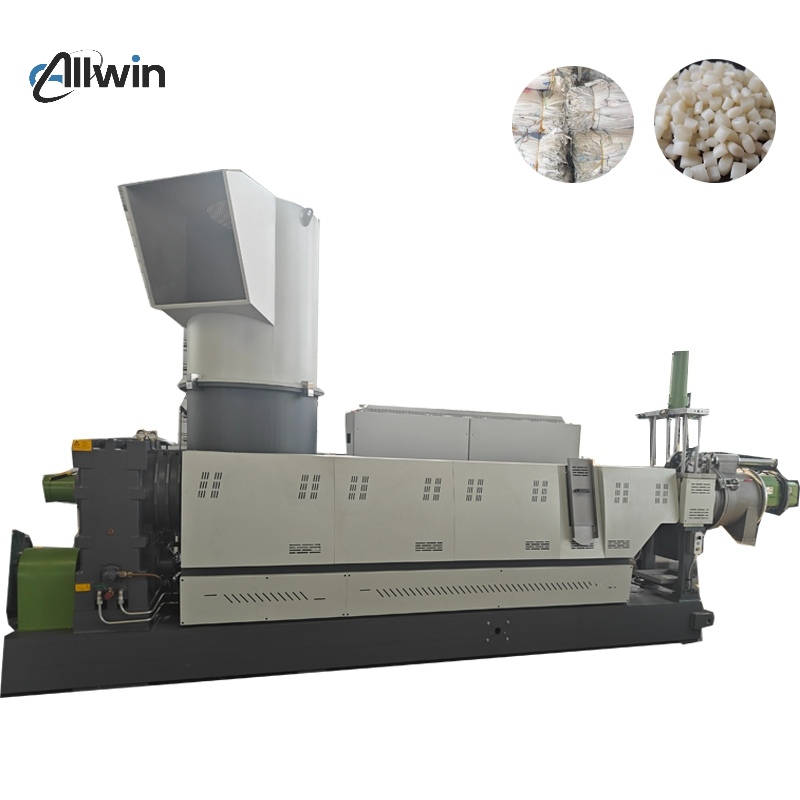
500kg/h HDPE LDPE Film Pelletizer Machine | Plastic Recycling Granulator
-
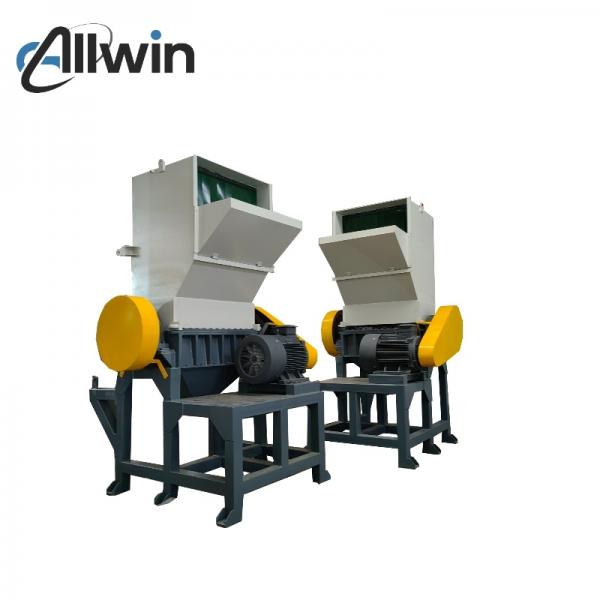
Plastic Crusher Machine
-
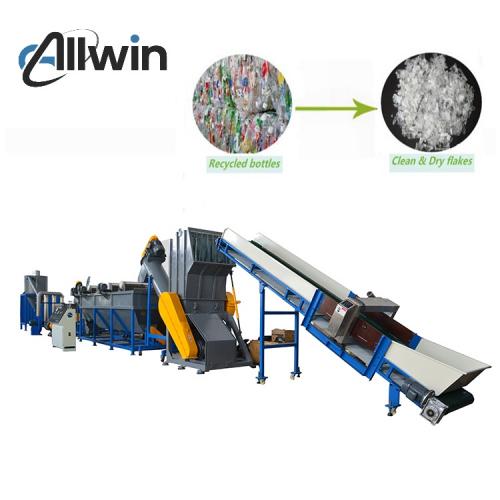
Plastic film PP Woven Bag Jumbo Big Cement Bag Recycling Washing Line
-
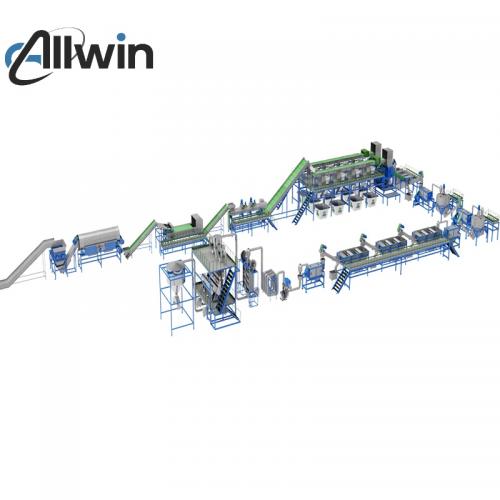
Plastic PP PE bottle recycling washing machine